

The leafy milk hedge is one of India’s most practical yet overlooked plants. Once you learn about the many leafy milk hedge uses, it becomes clear why farmers, herbalists, and gardeners have relied on it for generations. This spiny succulent, known botanically as Euphorbia nivulia, does far more than mark field boundaries.
This guide covers everything you need to know about this plant. You’ll learn its traditional medicinal applications, its role in Indian agriculture, and practical tips for growing it at home.
What Is the Leafy Milk Hedge?
The leafy milk hedge is a succulent shrub or small tree from the Euphorbiaceae family. Its botanical name is Euphorbia nivulia, and people also call it the holy milk hedge, milk hedge plant, or dog’s tongue. The Euphorbia nivulia common name varies by region, but “leafy milk hedge” remains the most widely used term in English.
This plant grows naturally across India, Pakistan, Sri Lanka, Bangladesh, and Myanmar. It thrives in both dry and wet deciduous forests, and it also grows well on rocky hillsides. Farmers have long valued it for one simple reason: it survives where many other plants cannot.
Leafy Milk Hedge Height and Appearance
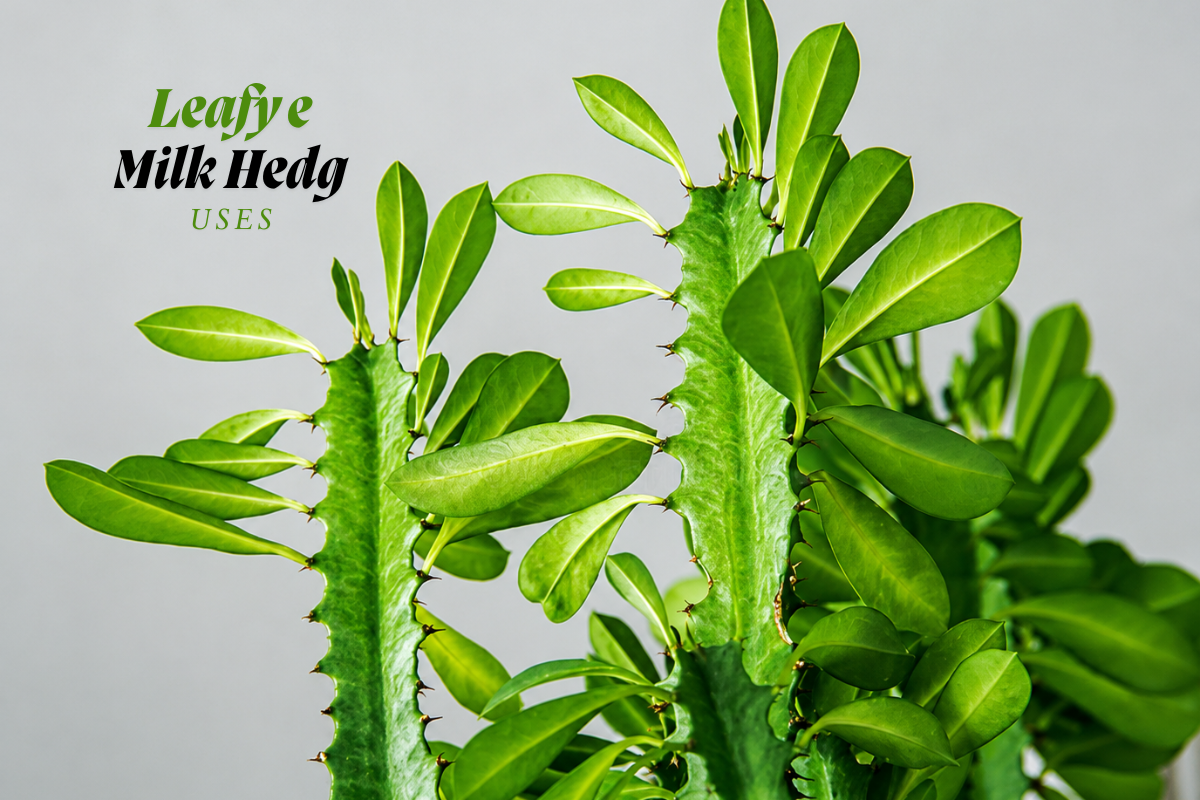
A mature leafy milk hedge height can reach up to 9 meters, though most cultivated hedges stay shorter through regular trimming. The stem is thick, succulent, and covered in spiral rows of sharp spines. Fleshy, spoon-shaped leaves grow along the branches, giving the plant its “leafy” name and setting it apart from leafless Euphorbia species.
Every part of this plant contains a milky white latex. This latex flows out immediately when you cut or bruise the stem or leaves. It’s a defining feature of the plant and the source of both its common name and many of its traditional uses.
Leafy Milk Hedge in India: A Living Fence
The leafy milk hedge in India serves a very practical purpose: it forms living fences around farmland. Farmers plant cuttings close together along field borders, and within a few seasons, the plants grow into a dense, thorny barrier. This barrier keeps stray cattle and wild animals away from crops without any need for wire or concrete.
This use has continued for centuries in rural India, especially in Maharashtra, Karnataka, and parts of South India. Unlike artificial fencing, a living hedge needs little maintenance once established. It also helps prevent soil erosion along field edges, since its root system holds the topsoil in place during heavy rains.
Beyond farmland, gardeners now use the leafy milk hedge as an ornamental boundary plant in home gardens. Its unusual, sculptural form adds visual interest, and its low water needs make it a practical choice for dry climates.
Leafy Milk Hedge Benefits and Medicinal Uses
Traditional Indian medicine systems, particularly Ayurveda and Siddha, have documented leafy milk hedge benefits for centuries. Euphorbia nivulia medicinal uses center mainly around its latex and leaf juice, both of which contain active plant compounds like terpenes, flavonoids, and phenolic compounds.
Here are some of the most commonly documented traditional applications:
- Digestive support: Practitioners have traditionally used leaf juice as a purgative for conditions like jaundice and liver or spleen enlargement.
- Respiratory use: The coagulated latex has a history of internal use for bronchitis in traditional practice.
- Wound care: Traditional healers apply the latex to wounds, and some modern lab studies support its wound-healing and blood-clotting properties.
- Joint pain relief: A paste made from the leaves, often combined with neem oil, has traditional use as a topical treatment for rheumatism.
- Veterinary care: Rural communities have long applied the latex to treat wounds and infections in cattle.
Modern research adds further weight to these traditional claims. Laboratory studies have found that leaf and latex extracts show measurable antibacterial activity against organisms like Staphylococcus aureus and E. coli. Some studies also report antifungal and insect-repelling properties, which helps explain why this plant appears so often in folk medicine across the Indian subcontinent.
It’s important to add a clear caution here. The latex is a strong skin irritant, and it can be toxic if someone swallows it in any significant quantity. Traditional internal use should only happen under the guidance of a qualified practitioner who understands correct dosage. This article shares historical and research context only, not medical advice.
Milk Hedge Plant Uses Beyond Medicine
Milk hedge plant uses extend well past traditional healing and farm fencing. Rural communities have found practical, everyday applications for nearly every part of this hardy plant.
- Fresh latex serves as a natural milk-clotting agent in some traditional cheese-making practices, similar to how people use fig or papaya latex.
- Dense hedges planted along riverbanks and slopes help control soil erosion.
- The plant’s drought tolerance makes it a low-maintenance choice for xeriscaping in water-scarce regions.
- Some communities use the spiny branches as a natural deterrent against small animals in kitchen gardens.
These applications show why the plant has earned a permanent place in traditional rural life. It solves multiple problems at once: fencing, soil protection, and folk remedies, all from a single hardy species.
Leafy Milk Hedge Propagation and Care
Leafy milk hedge propagation is straightforward, which explains why it spread so widely across Indian farmland. Growers typically use stem cuttings rather than seeds, since cuttings root faster and produce reliable results.
Follow these steps for successful propagation:
- Cut a healthy stem section, ideally 30 to 45 centimeters long, using a clean blade.
- Let the cutting rest in a dry, shaded spot for five to seven days. This step allows the cut end to callus over, which prevents rot once planted.
- Plant the callused cutting in well-draining, sandy soil, burying it a few centimeters deep.
- Water lightly and infrequently until roots establish, usually within four to six weeks.
This plant prefers full sun and tolerates poor, rocky soil without complaint. It needs very little water once established, which makes it a resilient choice for gardeners in hot, dry climates. Avoid overwatering, since the succulent stems can rot quickly in soggy soil.
Conclusion
The many leafy milk hedge uses reflect centuries of practical wisdom passed down through Indian agricultural and medicinal traditions. From protecting farmland as a living fence to supporting traditional remedies for wounds, joint pain, and digestive issues, this hardy plant continues to earn its place in rural life. Its easy propagation and low water needs also make it a smart option for anyone looking to add a resilient, low-maintenance plant to their garden.
Anyone interested in trying traditional remedies involving this plant should consult a qualified herbal practitioner first, given the latex’s irritant properties. Used thoughtfully and with proper guidance, the leafy milk hedge remains a genuinely useful plant for both farms and gardens.
1. What are the main leafy milk hedge uses? The leafy milk hedge serves as a living fence for farmland, a traditional medicine source for wounds and digestive issues, and an ornamental plant for dry-climate gardens.
2. What is the Euphorbia nivulia common name? Its most common name in English is leafy milk hedge. People also call it holy milk hedge, milk hedge plant, or dog’s tongue, depending on the region.
3. How tall does a leafy milk hedge grow? A mature leafy milk hedge height can reach up to 9 meters in the wild, though regularly trimmed hedges usually stay much shorter for practical management.
4. Is leafy milk hedge propagation difficult? No, propagation is simple. Growers typically root stem cuttings in well-draining soil after letting the cut end callus for about a week.
5. Is the leafy milk hedge safe to touch or use at home? The latex is a strong skin irritant and can be toxic if ingested in large amounts. Handle the plant with gloves, and avoid any internal use without guidance from a qualified practitioner.